Classification Of Partially Edentulous Arch Introduction
Partially edentulous arch can be classified by various classifications. Any partially edentulous condition can be classified by several classifications. The present chapter deals with commonly used classification. A brief discussion is presented about the rules which are applied to classify the particular partially edentulous condition.
Table of Contents
Classification Of Partially Edentulous Arch Ideal Requirements
- It should be universally acceptable.
- It should differentiate between types of support available, i.e. tooth supported or tissue supported partial denture.
- The classification should help the operator/technician to design the partial denture.
- It should permit easy visualization of partially edentulous arch.
Read and Learn More: Preclinical Prosthodontics Notes
Various classifications are proposed to classify partially edentulous arch. The most accepted classification is one proposed by Edward Kennedy in 1925. This is the most popular classification. This classification is based on common occurrence of particular condition, i.e. loss of posterior teeth is more common, so condition where posterior teeth are missing is classified as class I.
Kennedy’S Classification
- Class I: Bilateral edentulous area located posterior to the remaining natural teeth.
- Class II: Unilateral edentulous area located posterior to the remaining natural teeth.
- Class III: Unilateral edentulous area bounded anteriorly and posteriorly by the natural teeth.
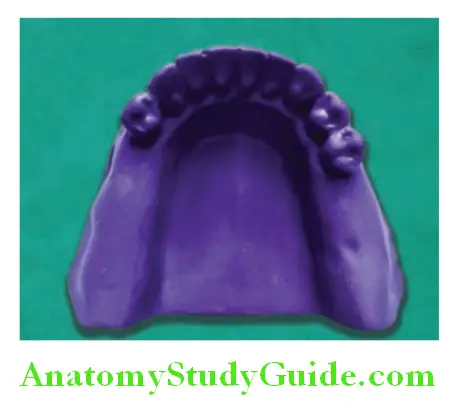
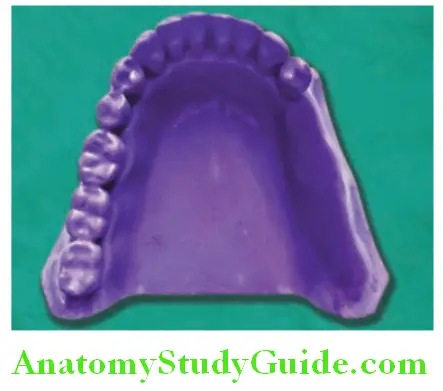
- Class IV: Single edentulous area located anterior to the remaining natural teeth and crossing the midline. Applegate expanded the classification of Kennedy by adding two more class to the classification as under.
- Class V: An edentulous area bounded anteriorly and posteriorly by natural teeth but in which the anterior abutment (if lateral incisor is the anterior abutment) is not suitable for support.
- Class VI: In edentulous area, in which the teeth adjacent to the space are capable of total support of the required prosthesis. This does not require any tissue support.
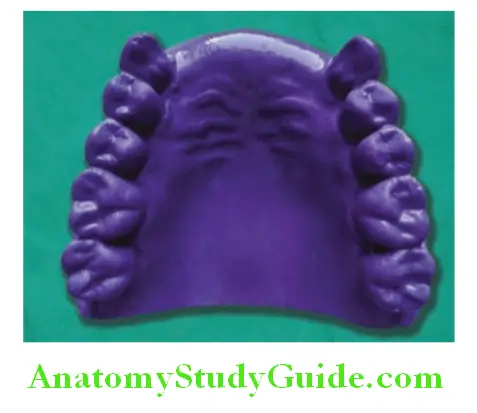
It would occur in young adult for whom a fixed partial denture is recommended.
Applegate’S Rules For Applying The Kennedy Classification
- Rule 1: Classification should follow rather than precede mouth preparations or extraction.
- Rule 2: If the third molar is missing and not to be replaced, it is not considered in the classification.
- Rule 3: If the third molar is present and to be used as an abutment, it is considered in the classification.
- Rule 4: If the second molar is missing and not to be replaced, it is not considered in the classification.
- Rule 5: The most posterior edentulous area determines the classification.
- Rule 6: Edentulous areas other than those determining classification are called modification spaces.
- Rule 7: The extent of the modification is not considered, only the number (modification gives idea about additional edentulous spaces other than one which determines the classification. It does not give idea about number of missing teeth).
- Rule 8: There is no modification space in Class IV.
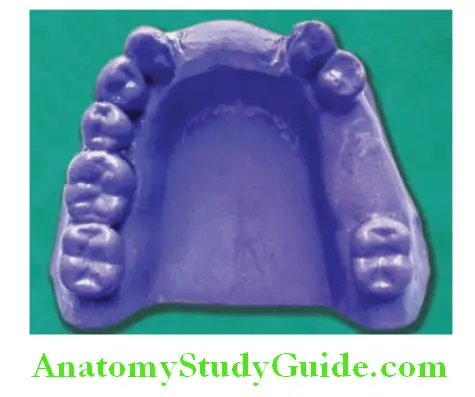
How to Classify the Condition?
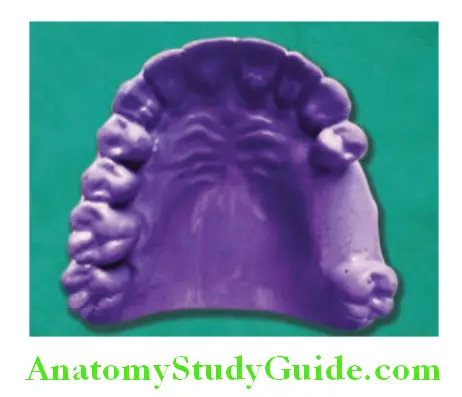
- Class III, mod I: First of all calculate the number of partially edentulous areas. There are two partial edentulous areas present in the cast. The most posterior partial edentulous area is bounded anteriorly and posteriorly by remaining natural teeth so classified as class III and there is one additional partially edentulous area located in anterior section. That will be considered as modification. So, the condition is classified as class III, mod I.
- Class I, mod II: Four partially edentulous areas are present on the cast. The most posterior area is located bilaterally giving the classification as class I.
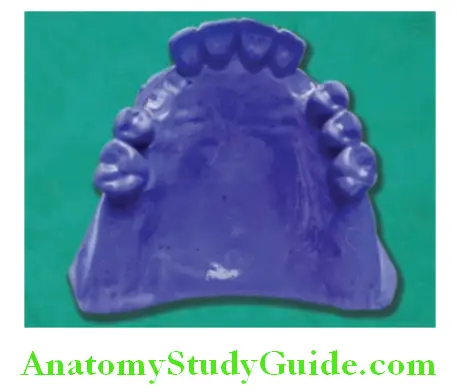
In addition, there are two more areas located anteriorly which will be designated as modifications. So, the condition can be classified as class I, mod II.
Some Common Classifications For Partially Edentulous Arch
- Cummer’s classification
- Godfrey’s classification
- Mauk’s classification
- Bailyn’s classification
- Neurohr’s classification
- Beckett’s classification
- Friedman’s classification
- Skinner’s classification
- Swenson’s classification
- ACP classification.
Leave a Reply