• Skip to main content
  • Skip to secondary menu
  • Skip to primary sidebar
  • Skip to footer
  • Anatomy
    • Anatomy Question And Answers
    • Face Anatomy
    • Neck Anatomy
    • Head Anatomy
    • Oral Anatomy
    • Lower Limb
    • Upper Limb
  • Endodontics
    • Paediatric Dentistry
  • General Histology
    • Oral Histology
    • Genetics
  • Pediatric Clinical Methods
  • Complete Dentures
    • Pharmacology for Dentistry
  • Medical Physiology
    • Body Fluids
    • Muscle Physiology
    • Digestive System
    • Renal Physiology
    • Endocrinology
    • Nervous System
    • Respiratory System
    • Cardiovascular System
    • Reproductive System
    • Oral Physiology
  • General Medicine
  • General Pathology
    • Systemic Pathology
    • Oral Pathology
    • Neoplasia
    • Homeostasis
    • Infectious Diseases
    • Infammation
    • Amyloidosis Notes
  • Periodontology
  • General Surgery
    • Basic Principles Of Surgery
    • General Surgery

Anatomy Study Guide

Anatomy Study Guide

  • About Us
  • Contact Us
  • Privacy Policy
  • Terms of Use
  • Disclaimer
  • Sitemap
Home » Fabrication Of Occlusal Rims Notes

Fabrication Of Occlusal Rims Notes

June 8, 2023 by Joankessler parkland Leave a Comment

Fabrication Of Occlusal Rims Introduction

This chapter explains the fabrication of wax occlusal rims using the rolled wax technique. This is the most commonly used method for the fabrication of occlusal rims. Follow the procedure step by step for accurate fabrication of occlusal rims.

Table of Contents

  • Fabrication Of Occlusal Rims Introduction
  • Armamentarium
  • Fabrication Of Maxillary Occlusal Rim
  • Fabrication Of Mandibular Occlusal Rim

Armamentarium

Maxillary and mandibular master casts with record base.

  • Modeling wax
  • Pencil or marker pen
  • Bunsen burner
  • Wax Knife
Body Fluids Muscle Physiology Digestive System
Endocrinology Face Anatomy Neck Anatomy
Lower Limb Upper Limb Nervous System

Read and Learn  More: Preclinical Prosthodontics Notes

  • Wax carver
  • Wax Spatula
  • Hot plate
  • Metallic scale.

Fabrication Of Maxillary Occlusal Rim

Step 1:

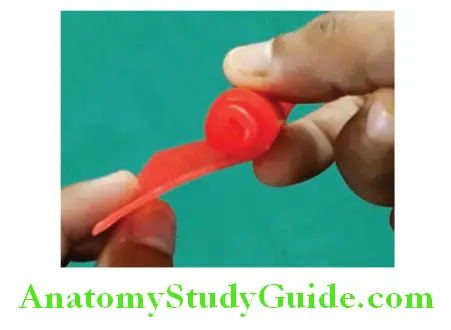
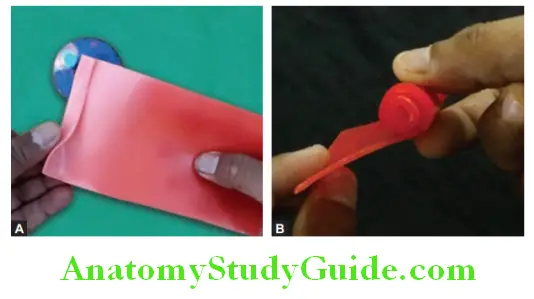
Take a sheet of modeling wax. Heat it over the flame of the Bunsen burner to soften it. Fold it from one end (approximately 0.5 cm). Take care not to melt it. Continuously soften it and roll it to prevent air bubble entrapment during rolling.

Step 2:

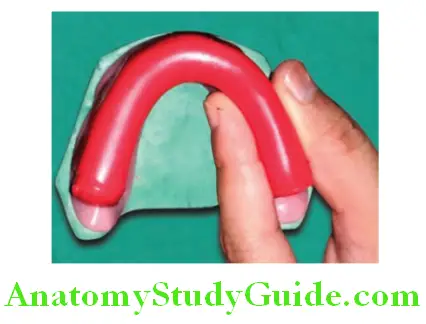
Roll the full wax sheet to get a wax roll of a diameter of around 2–3 cm. Place one end of the rolled wax on the posterior aspect of the record base (maxillary tuberosity) and follow the arch contour to the other posterior end.

Step 3:

Apply downward pressure on a wax roll by holding it in between the index finger and the thumb to extend it along the borders. Follow the arch contour while doing this to maintain the arch.
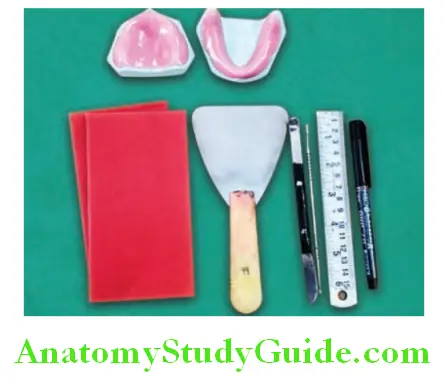
Fabrication Of Occlusal Rims armamentarium of maxillary and mandibular master casts

Fabrication Of Occlusal Rims softening the wax sheet over bunsen burner and rolling it to make wax roll

Fabrication Of Occlusal Rims placement of wax roll following the arch shape

Step 4:

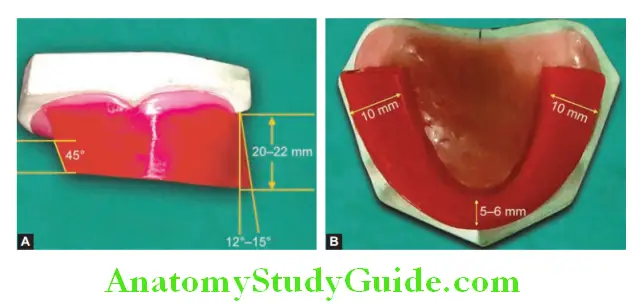
Give inside to outward push (thrust) in the anterior region. This is done to give inclination to the anterior rim. The inclination (protrusion) should be 12–15°. Due to inclination, the maxillary rim becomes thinner anteriorly compared to posteriorly.

Step 5:

Seal the adapted wax on buccal and lingual peripheries using a hot wax spatula or wax knife. Add or remove wax to fill up voids, spaces, and irregularities. Smooth the buccal surface maintaining the arch.

Fabrication Of Occlusal Rims extend the wax till the borders of record base index finger and thumb

Step 6:

Cut the wax roll if extended over the maxillary tuberosity.

Step 7:

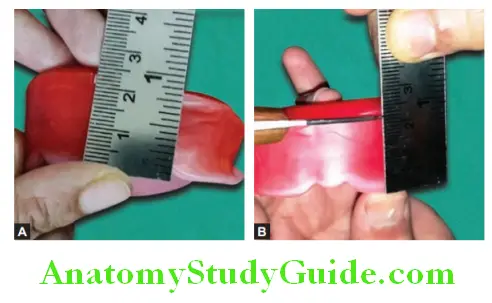
Measure the height of the occlusal rim in the canine area. Mark it 2–3 mm more than the required height.

Fabrication Of Occlusal Rims inside to outward thrust is given to achieve anterior protrusion

Fabrication Of Occlusal Rims extended was roll to be cut over the maxillary tuberosity

Fabrication Of Occlusal Rims seal the wax on all peripheries of record base

Fabrication Of Occlusal Rims measure and mark the height of oculars rim in canine area

Step 8:

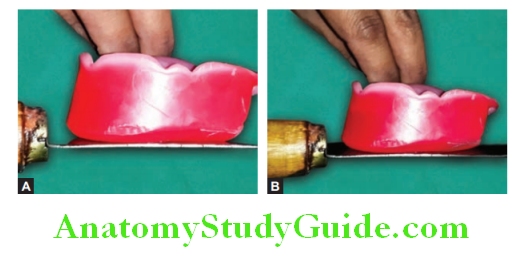
Reduce the excess height by using a hot plate. Perform this procedure very slowly and frequently check the plane during the reduction. The hot plate is used for the reduction of height and to make a plane of occlusion.

Step 9:

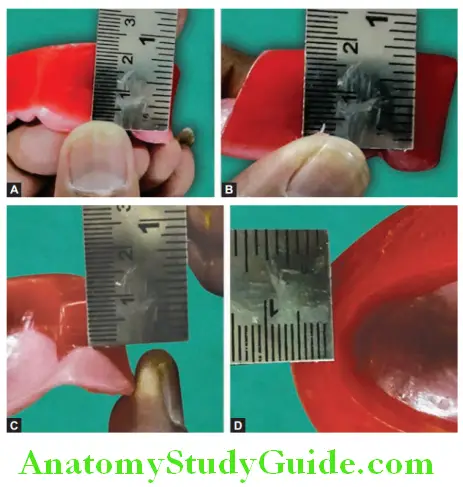
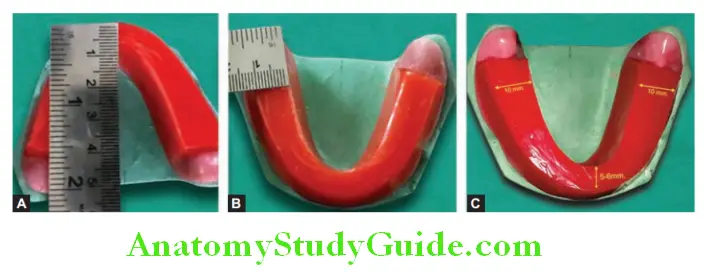
Make anterior height 20–22 mm in the canine region and posterior height 18 mm in the molar region from the border of the record base. Adjust the anterior width 5–6 mm and the posterior width 8–10 mm.

Fabrication Of Occlusal Rims reduction of height of occusal rim and establishing the occlusion plane

Fabrication Of Occlusal Rims anterior heoght 20-22 mm in canine region and posterior height 18 mm in molar region from border of record base

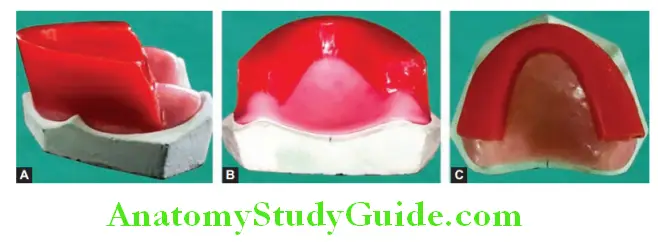
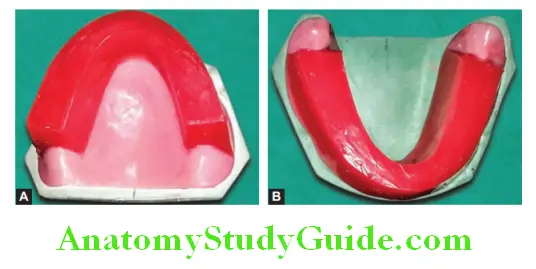
Fabrication Of Occlusal Rims maxillary occlusal rim side view palatal view and top view

Fabrication Of Occlusal Rims various measurements of maxillary occlusal rim

Step 10:

Remove excess wax from the borders. Check the tissue surface of the record base, it should be free of any wax. The labial, buccal, and lingual surfaces of the occlusal rim should be smooth and polished.

Fabrication Of Mandibular Occlusal Rim

Step 1:

Take a sheet of modeling wax. Heat it over the flame of the Bunsen burner to soften it. Fold it from one end (approximately 0.5 cm). Take care not to melt it. Continuously soften it and make a wax roll.

Step 2:

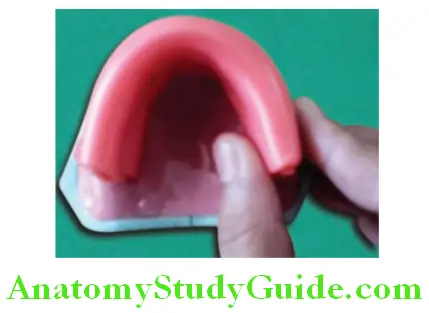
Place one end of the rolled wax on the posterior aspect of the record base (retromolar pad) and follow the arch contour to the other posterior end.

Step 3:

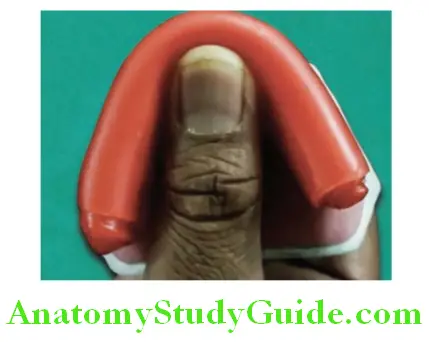
Apply downward pressure on a wax roll by holding it in between the index finger and the thumb to extend it along the borders. Follow the arch contour while doing this to maintain the arch.
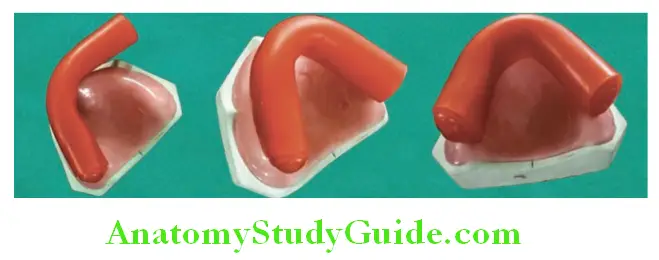
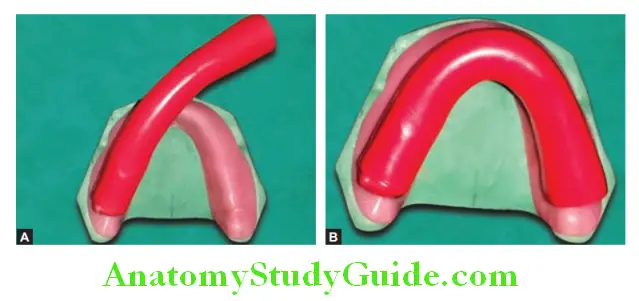
Fabrication Of Occlusal Rims rolling the wax sheet

Fabrication Of Occlusal Rims placing wax rolls following the arch contour

Fabrication Of Occlusal Rims extend the wax till the borders of record base using index finger and thumb

Step 4:

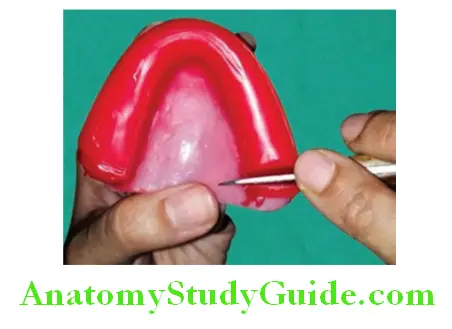
Seal the adapted wax on buccal and lingual peripheries using a hot wax spatula or wax knife. Add or remove wax to fill up voids, spaces, and irregularities. Smoothen the buccal surface maintaining the arch form.

Step 5:

Position the wax rim on the mandibular ridge according to the guidelines. The rim should be extended to the anterior aspect of the retromolar pad. Position the wax rim equally on the buccal and lingual aspect of the crest of the ridge.

Step 6:

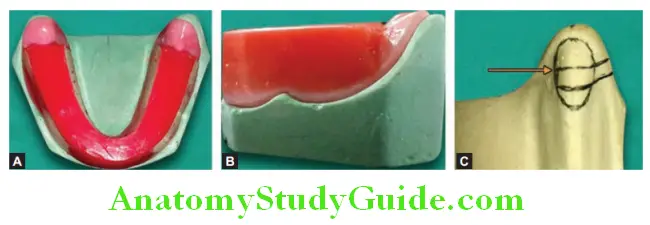
Mark the height of 16 mm in the canine region. The Posteriorly height of the wax rim is two-thirds of the height of the retromolar pad. Reduce the height accordingly with a hot plate.

Step 7:

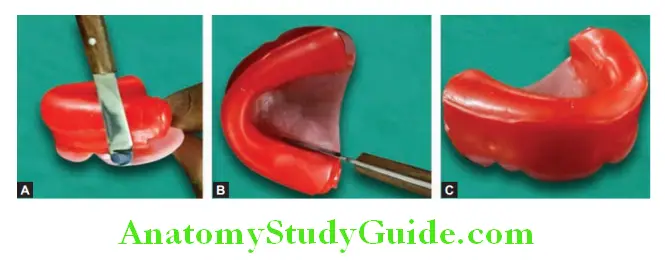
Width in the anterior region is 5–6 mm and in the posterior region, it is 8–10 mm. Finished and polished maxillary and mandibular wax rims.
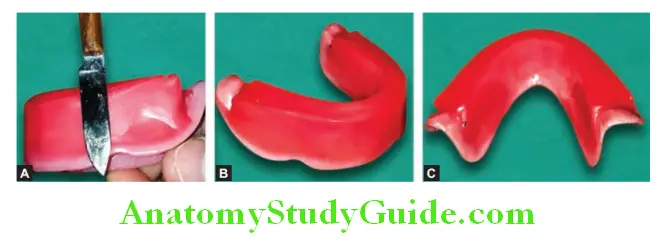
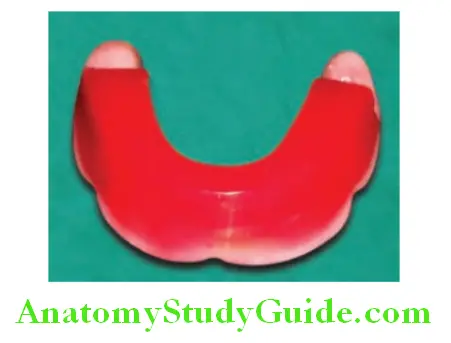
Fabrication Of Occlusal Rims sealling the wax on denture base

Fabrication Of Occlusal Rims positioning of the wax rim on mandibular ridge

Fabrication Of Occlusal Rims adjust the height of occulusal rim arrow indicating two thirds of retromolar pad

Fabrication Of Occlusal Rims adjust the width of occlusal rim

Fabrication Of Occlusal Rims finished and polished maxillary and mandibular wax rims

Filed Under: Preclinical Prosthodontics

Reader Interactions

Leave a Reply Cancel reply

Your email address will not be published. Required fields are marked *

Primary Sidebar

Recent Posts

  • Esophagus Anatomy
  • Lacrimal Apparatus: Anatomy, Parts & Function
  • Scalp Temple And Face Question and Answers
  • Orbicularis Oculi Muscle Anatomy
  • Extraocular Muscles Anatomy
  • Ciliary Ganglion Anatomy
  • Femoral sheath Anatomy
  • Femoral Artery – Location and Anatomy
  • Adductor Canal: Anatomy And Function
  • Ankle Joint: Anatomy, Bones, Ligaments And Movements
  • Risk Factors For Breast Cancer
  • Cervical Tuberculous Lymphadenitis Notes
  • Carbuncles: Causes, Symptoms, and Treatments
  • Sinuses And Fistulas Notes
  • Cellulitis: Treatments, Causes, Symptoms
  • Pyogenic Liver Abscess: Causes, Symptoms, and Diagnosis
  • Acid Base Balance Multiple Choice Questions
  • General Surgery Multiple Choice Questions
  • Hypertrophic Scarring Keloids Multiple Choice Questions
  • Surgical Site Infection Multiple Choice Questions
  • Facebook
  • Pinterest
  • Tumblr
  • Twitter

Footer

Anatomy Study Guide

AnatomyStudyGuide.com is a student-centric educational online service that offers high-quality test papers and study resources to students studying for Medical Exams or attempting to get admission to different universities.

Recent

  • Esophagus Anatomy
  • Lacrimal Apparatus: Anatomy, Parts & Function
  • Scalp Temple And Face Question and Answers
  • Orbicularis Oculi Muscle Anatomy
  • Extraocular Muscles Anatomy

Search

Copyright © 2026 · Magazine Pro on Genesis Framework · WordPress · Log in