Fabrication Of Three Unit Fixed Partial Denture
Instruments And Materials
- Inlay wax
- Sprue former
- Casting ring
- Ring liner
- Sprue base/investment material
Read and Learn More: Preclinical Prosthodontics Notes
Table of Contents
- Distilled water
- Brush
- Furnace
- Crucible
- Tungsten carbide bur.
Fabrication Of Three Unit Fixed Partial Denture Procedure
Tooth preparation is done and impression is made. Die preparation is done after pouring the impression. Wax pattern is prepared on dies by indirect technique using inlay wax (type II). Sprue former is attached at maximum bulk of the wax pattern or on the nonfunctional cusp.
Casting ring liner is placed in casting ring. It should be 3 mm short at both the ends of the casting ring. The ring is placed over the sprue base to which wax pattern is attached while the height is adjusted in such a way that wax pattern is one-fourth inch away for the open end of the ring.
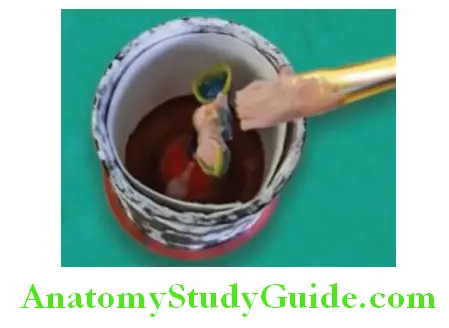
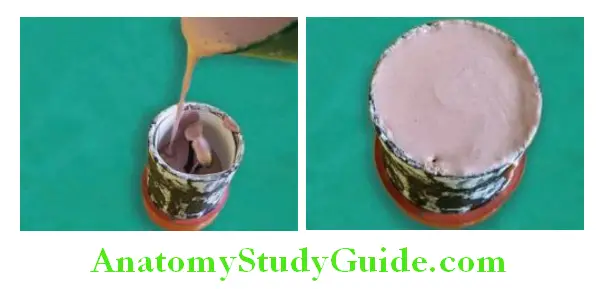
Investment material is mixed with mixing liquid and is painted on the wax pattern with the help of the camel paint brush. Sometimes dry investment material is sprinkled on it to eliminate excess water if any. The ring is filled with remaining investment from the side of the ring allowing the material to flow uniformly against earlier investment painted over wax pattern, till the ring is completely filled with investment material.
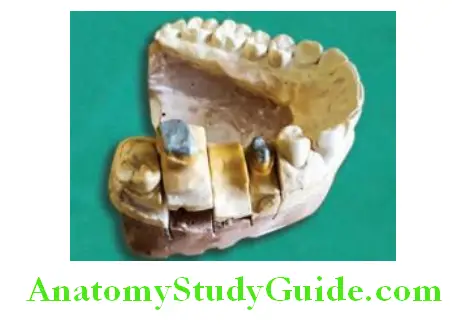
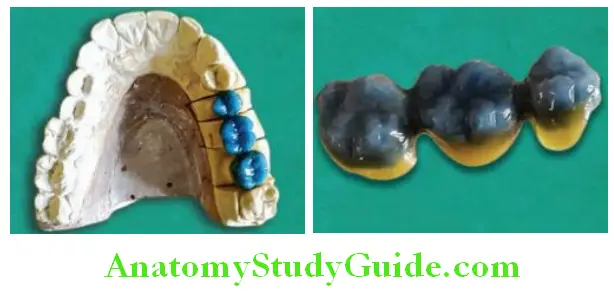
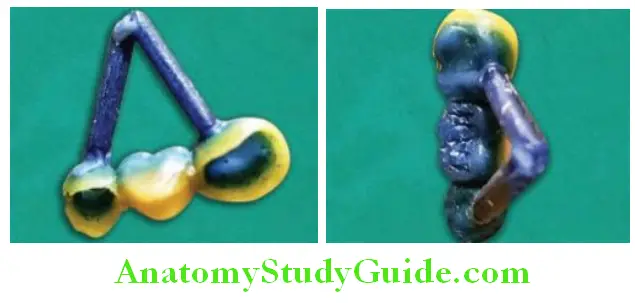
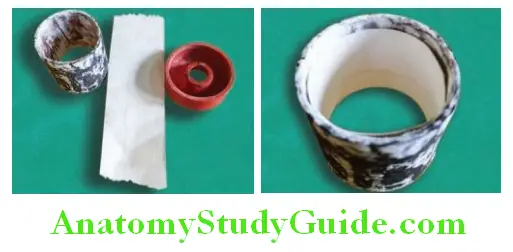
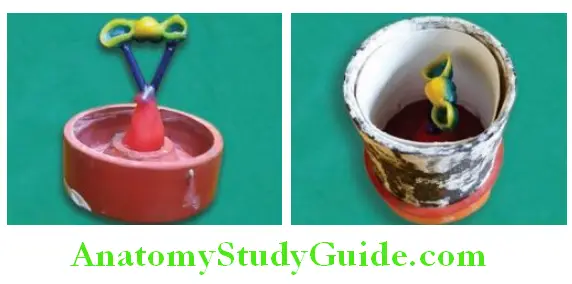
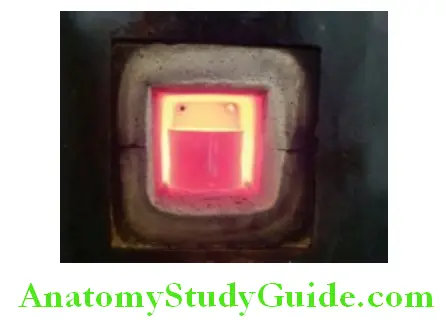
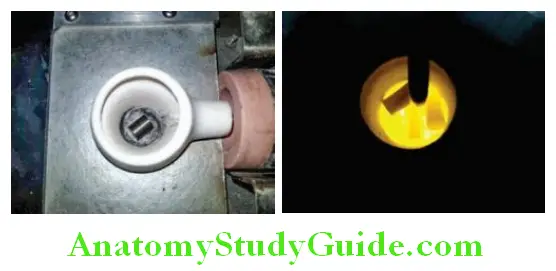
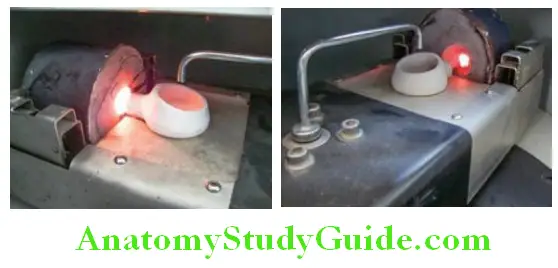
After investment has set, the ring is placed in the furnace and gradually heated at 650°C for an hour for wax pattern burn out. Alloy is melted in casting crucible and allowed to flow in the mould formed after burn out procedure.
The melted metal is flown to the casting ring to take shape of the restoration. Once the casting ring is cooled down to the room temperature, divestment is done to remove casting from the ring. Sprue is cut and casting is checked on the
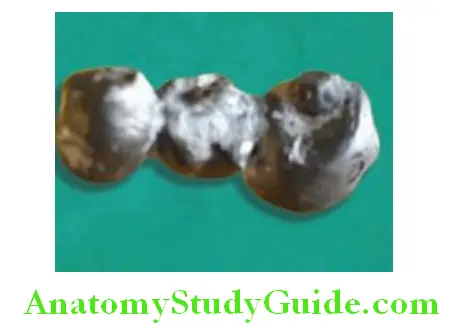
tooth fitting surfaces for any irregularities which will be eliminated using tungsten carbide burs. Opaque layer is applied on the casting coping to hide the metallic color of metal alloys and to improve esthetic. After opaque layer dentine and enamel layers of porcelain are applied and occlusal anatomy is created. Finally glazing is done to give final finish and luster to the prosthesis.
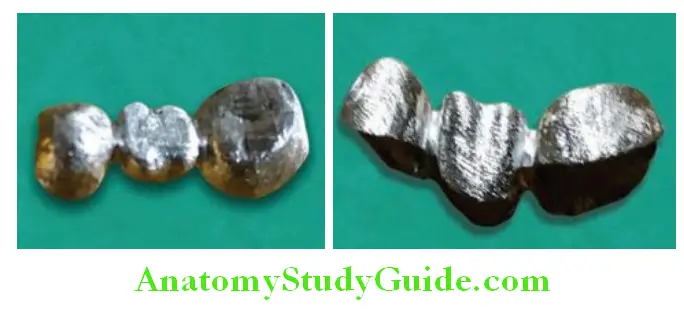
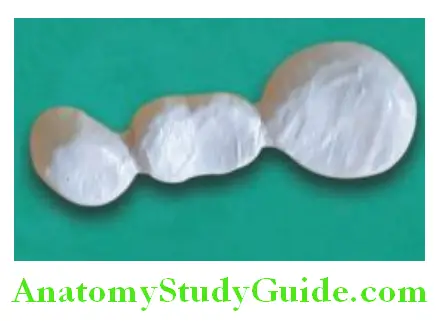
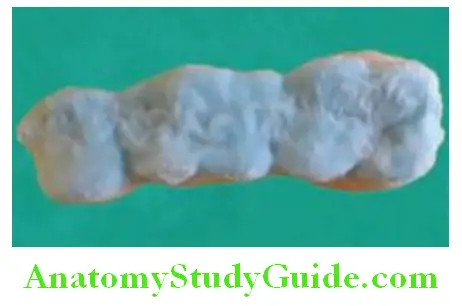
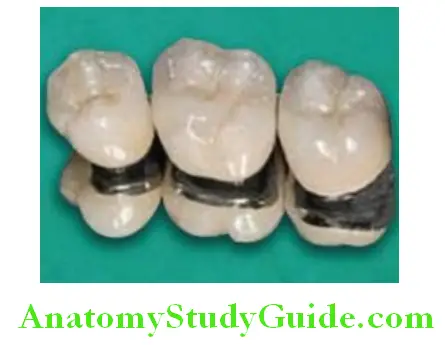
Note: The metallic cementation surface and porcelain occlusal surface.

Leave a Reply