Immunisation Schedule in Indian Children Introduction
Immunization is a mode of specific protection against diseases. It is a primary mode or the first level of disease prevention.
Table of Contents
It can also be described as a community-based preventive approach.
A pediatric dentist should be aware of the immunization schedule for children and the types of nvaccines.
This knowledge is essential to provide awareness of the subject to the parents and to ensure that the endodontic patient is adequately immunized against major/specific diseases.
Read And Learn More: Paediatric Dentistry Notes
Types Of Immunity
The immunity of an individual is his/her resistance to stay protected against initiation of disease and inoculation of specific micro-organisms even when exposed directly.
Immunity can be classified as natural immunity and adaptive immunity.
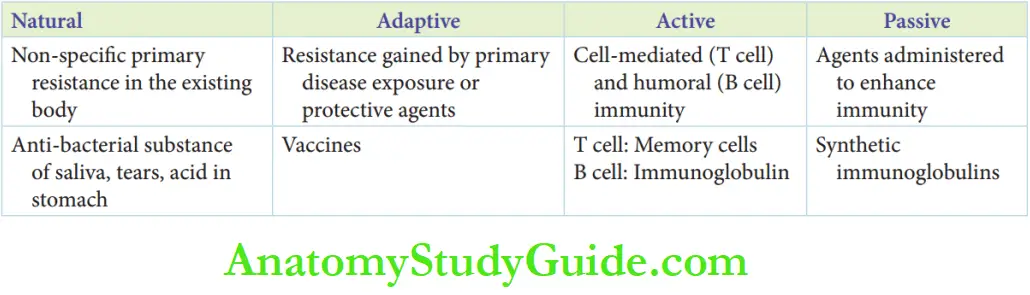
Natural immunity, as the term suggests, is a non-specific primary resistance that exists in the individual’s body against disease initiation.
Natural immunity includes the anti-bacterial activity of saliva, tears, and high acidity of the stomach.
Adaptive immunity is one that evolves in the individual as a result of primary disease exposure (active type) or passive administration of specific protective agents such as vaccines (passive type).
There is no such administration of agents or primary disease exposure in natural immunity.
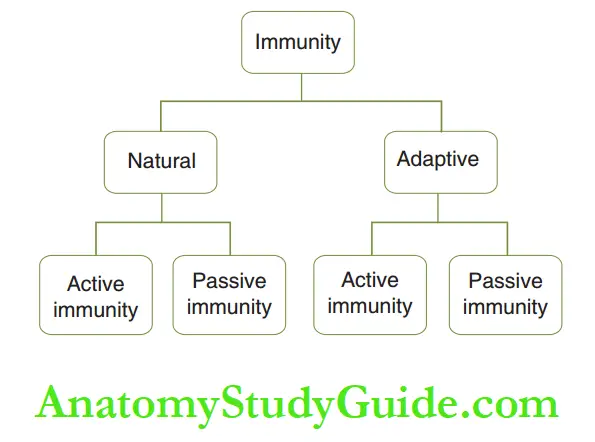
Immunity may also be classified as active immunity and passive immunity.
When an individual is exposed to a disease, the immune mechanism promotes cell-mediated immunity (T cell) and humoral (B cell) immunity.
When the disease is overcome by the immune mechanism, the T-cell immunity leaves memory cells which can prevent the inoculation of the same disease again.
The B-cell immunity leaves immunoglobulins which form specific protection against that particular disease, thus preventing its occurrence again.
The first line of barrier comprising memory T cells and immunoglobulins specific to the disease is called naturally evolved active immunity.
Sometimes, synthetic immunoglobulins may be administered to the individual to enhance immunity to a particular disease. This is called passive immunity.
Vaccines are of the following four types:
- Live microbial agents (of zero virulence)
- Killed microbes (attenuated)
- Microbial antigens/products
- Substances produced by microbes
All these may carry an antigenic stimulus to stimulate the body’s immune mechanism to form antibodies.
These antibodies enhance the body’s resistance to the specific disease for a specified period of time.
The duration of enhanced resistance produced by the vaccine depends on the life of the associated memory B cell.
If the duration is low, then the disease requires frequent booster doses for enhanced prevention.
Vaccines Administered To Indian Children
The various vaccines that are recommended by the Indian Academy of Pediatrics (IAP) and the time for administration.
Vaccines are required for the following diseases:
- Hepatitis
- Polio
- Diphtheria
- Pertussis
- Tetanus
- Measles
- Mumps
- Rubella
- Tuberculosis
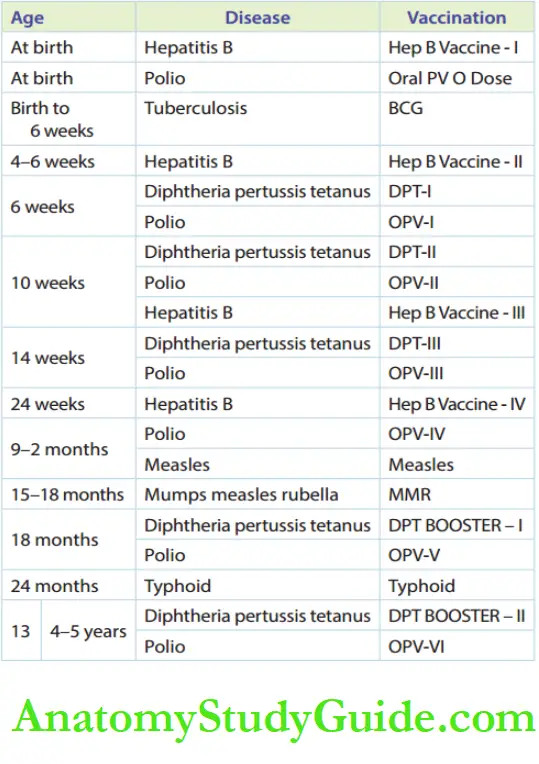
Immunisation Schedule in Indian Children Summary
1. Specific protection from a disease can be obtained by immunization.
2. Immunity is the resistance against the initiation of disease.
3. It can be natural and adaptive and active and passive:
4. The immunization schedule for Indian children given by IAP.

Leave a Reply